1. Overview
When a machine misbehaves, the answer is usually written down somewhere: in a visual manual (VM), a work instruction (WI) or a one-point lesson (OPL). There are thousands of them. Finding the right one used to take hours of searching, or a walk across the plant to ask someone who remembers.
ai-ebook lets operators ask the question in plain language and get an answer in seconds, with deep links back to the pages it came from.
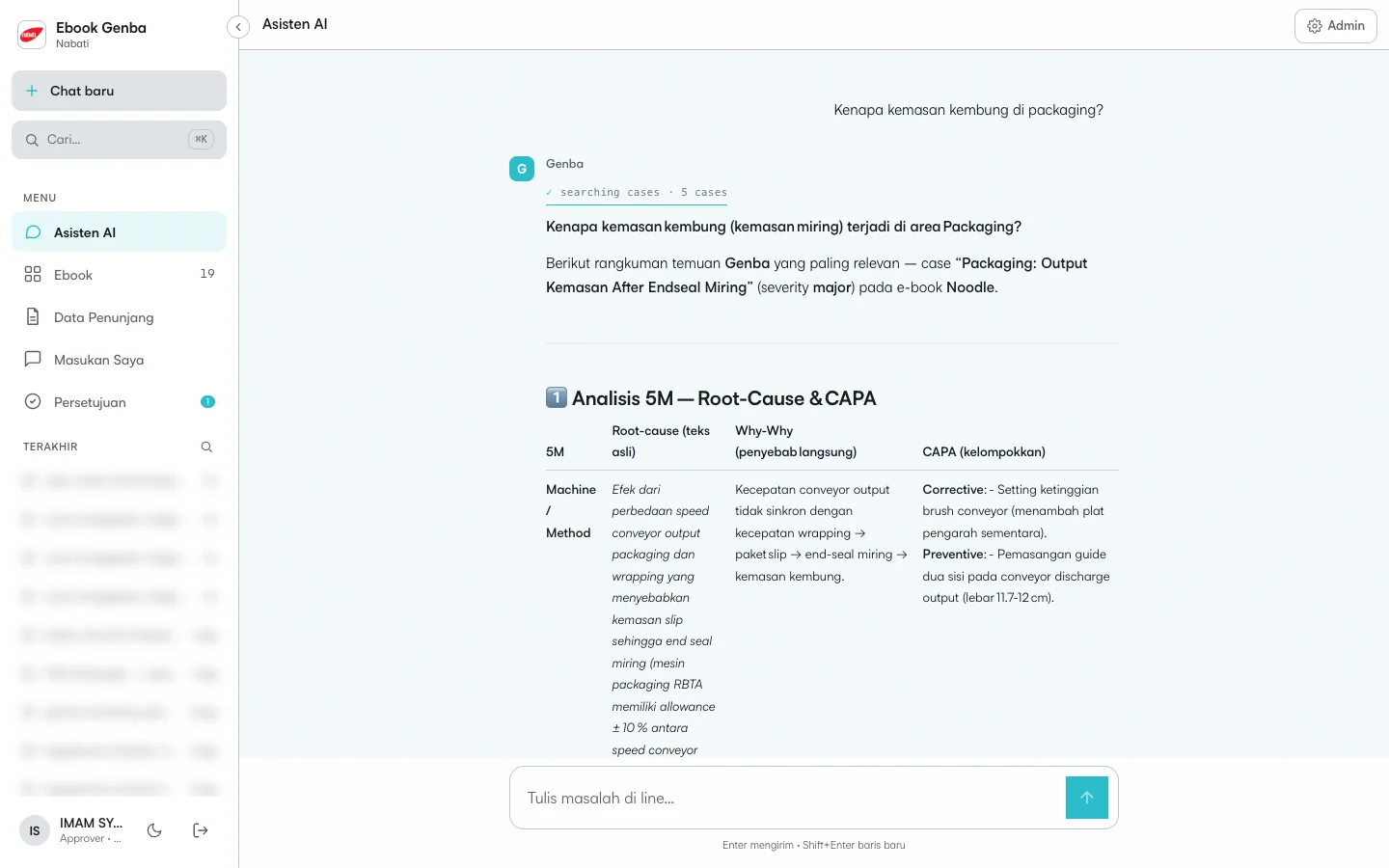
Figure 1: An answer to “why is packaging bloated?”, broken down into a 5M root-cause and corrective/preventive action (CAPA) table, built from 5 matching cases. Chat history is blurred.
2. Architecture
- Retrieval: hybrid search, combining BM25 keyword matching with pgvector similarity search.
- Reranking: a cross-encoder reorders the candidates before they reach the model.
- Answers: generated with citations, so every claim points at a real document.
- Evaluation: answer quality is tracked in Langfuse, so changes are measured rather than guessed.
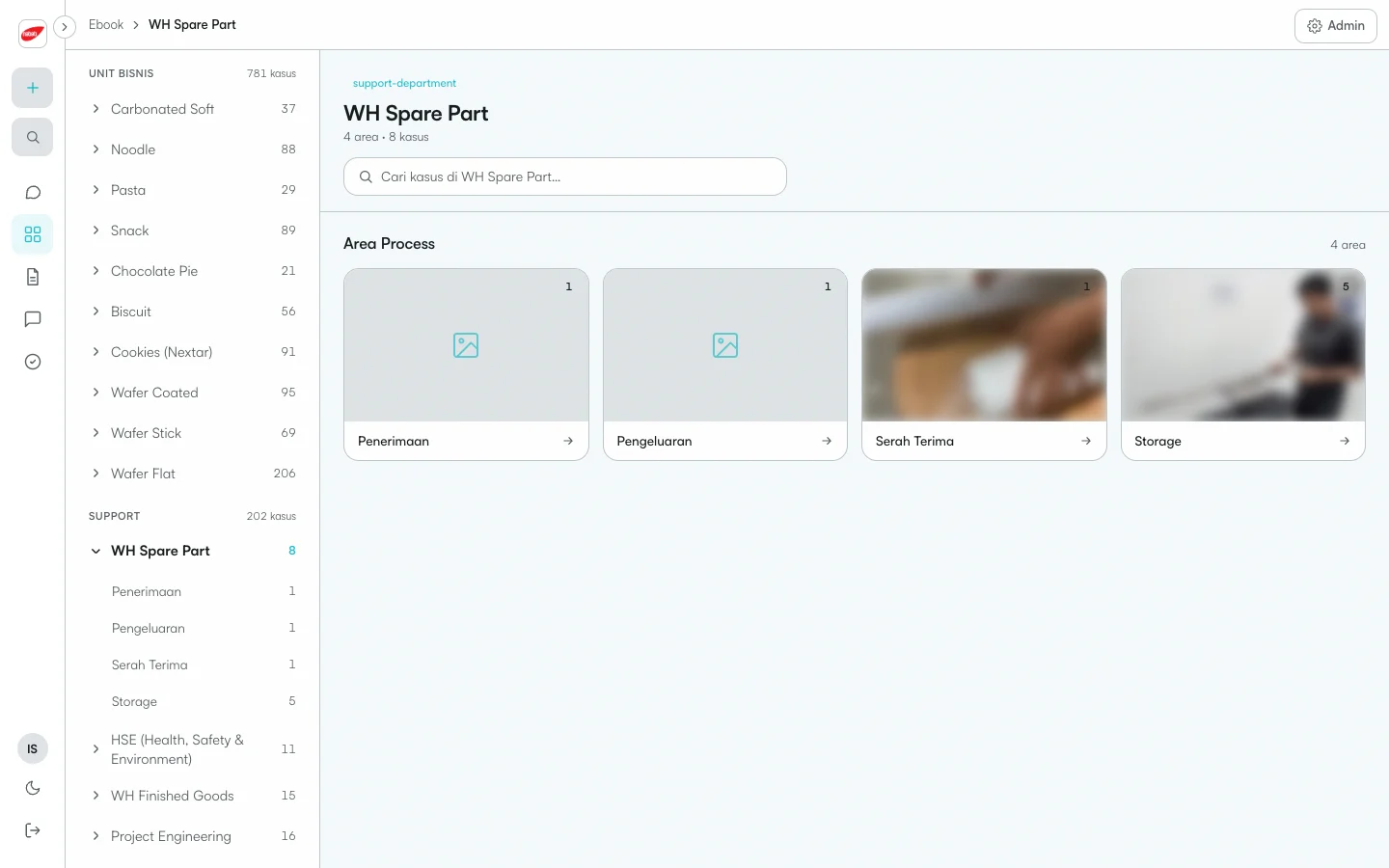
Figure 2: The case library, with 781 cases across business units and support departments, organised by area. Photos are blurred.
3. Lessons Learned
Factory documents are full of part numbers and machine codes. Pure vector search is bad at exact strings like these, which is why keyword search stays in the mix.